In an essay entitled The Hedgehog and the Fox, Isaiah Berlin quotes the Greek poet Archilochus, “The fox knows many things, but the hedgehog knows one big thing” (Berlin 7). The essay was written as a commentary on Leo Tolstoy’s view of history, however, the text can offer an understanding for how one might practice architecture as well. For us, this understanding reveals itself in perceiving the environment as a fox and believing in it as a hedgehog.
Perceiving the environment as a fox requires “plenty of full light” (Albers) and a methodical rigor aimed at exploring forces and processes including climate, culture, economy, atmosphere, and material.
Believing in the environment as a hedgehog requires a confidence and trust that the projects we build and discussions we nurture “feel the pull of life” (Martin 159) and contribute positively to our clients and the world around us.
—
Albers, Josef. Poems and Drawings. Ed. Nicholas Fox Weber. New Haven: Yale University Press, 2006. Print.
Berlin, Isaiah. The Hedgehog and the Fox; an Essay on Tolstoy’s View of History. New York: Mentor Books, 1957. Print.
Martin, Agnes and Briony Fer. Agnes Martin. Ed. Frances Morris and Tiffany Bell. London: D. A. P./Tate, 2015. Print.
Explore

The Tree Farm Clubhouse
New Holland, South Carolina
Commercial
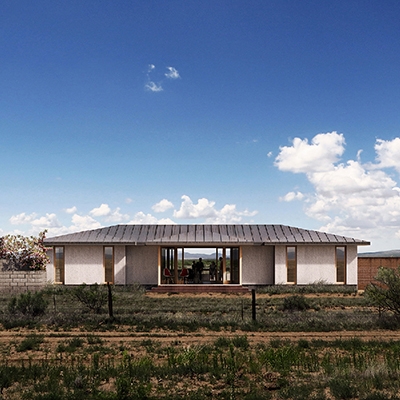
Located on an ideal site featuring sandy soils and rolling topography near Aiken, South Carolina, The Tree Farm Clubhouse seeks to bring to life a transcendent modern golf experience that respects, amplifies, and blends in with the natural landscape. In line with this vision, there will be no flashy buildings driven by a desire for luxurious experiences. Instead, the master plan and buildings for the project all work toward creating simple, thoughtful spaces that are rooted in and responsive to the place, climate, culture, and rich history of the game of golf.
Joe Rivers
Architect
Art and Design
In this episode, our resident architect Kevin Barden visits with our other resident architect Joe Rivers from Houston, Texas. Joe Rivers is principal architect at Rivers Barden Architects. Kevin sat down with Joe to discuss his influences in architecture, his interests outside of architecture, and the life lessons he’s learned along the way.

Pallasmaa On The Sublime
Kevin Barden
Writing
The emergence of digital and virtual technologies in the past decade has flourished exponentially giving academic environments and professional practices a newfound basis for collaboration between process and product. This essay proposes that we cannot lose sight of the underlying sources which drive a good process (whether digital, virtual, or manual) and lead to the opportunity for a great product. In his paper for the 101st Association of Collegiate Schools of Architecture, New Constellations New…