Skip to content

Erick Calderon

Art and Design

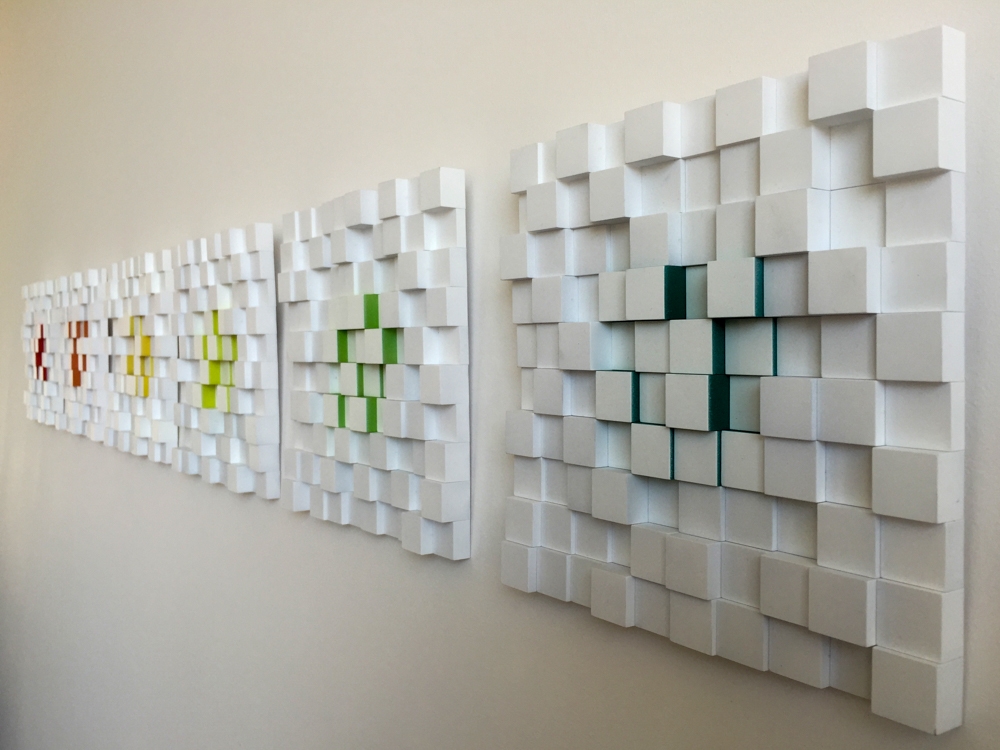
In this episode our resident architects Joe Rivers and Kevin Barden visit with Erick Calderon, a business owner, entrepreneur, artist, and maker from Houston, Texas. Erick Calderon is the owner of La Nova Tile, a company he started over a decade ago, after graduating from UT Austin with a degree in international business. But it wasn't until a more recently that he started experimenting with artistic sculpture and color gradations. Joe and Kevin visit with Erick about the start of his tile company, the forging of his artistic identity, and how his art feeds back into the business.
Explore

Memorial Townhome Renovation

Just steps from Memorial Park, this complete townhome renovation transforms a compartmentalized layout into an airy, light-filled sanctuary. Walls and columns were removed to create open sightlines and fluid movement, reflecting the client’s identity and lifestyle. Multiple skylights wash the double-height living space in daylight, shifting like an internal sundial and connecting inhabitants to the rhythms of time and season.

Reid Kennedy

Music and Performance

In this episode our resident architects Joe Rivers and Kevin Barden visit with Reid Kennedy, a drummer and composer from St. Paul, Minnesota. Reid Kennedy is a percussionist and pass drummer from St. Paul, Minnesota and a standout example of the modern working musician. In addition to being a top-call drummer in the Twin Cities, Reid teaches percussion and music theory at McNally Smith College of Music in downtown St. Paul. He composes, performs, records, and produces his own music in groups such as the Reid Kennedy Jazz Trio and Big Villain, and is the co-founder of the neo soul modern jazz darlings of Minneapolis, Nooky Jones. Joe and Kevin talk with Reid about his path to becoming a full-time musician, having passion for creating, and the ins and outs of collaboration.

Immersive Tools

Writing

At a time when artificial intelligence and digital tools dominate discussions of architectural education, the practice of making large-scale physical models serves as an ever more important tool for the development of a student’s creative voice, sense of discovery, and long-term learning. Through an understanding of temporal and spatial kairotic environments and an iterative process these large-scale physical models possess the potential to embody experiential qualities in a meaningful manner.